

When a Client Tells You: “You Missed It”
Last week, I was sitting in the school pickup line when a notification from a client popped up on my phone.
I had just finished a one-on-one session with her and had not left that call feeling great about how it went. Still, I was in mom mode, waiting for kids and trying to turn off the part of my brain that wanted to replay every awkward moment of the afternoon.
Then I opened the email.
She was not angry. Honestly, that almost made it harder. She was candid about how overwhelmed she felt, how much she had hoped the session would help her get control of her business again, and how she had walked away feeling more lost than when we started.
I sat there in the car with that awful, sinking feeling that comes when someone says the thing you were already afraid might be true.

Before the call, she had told me she felt wildly disorganized. She had projects, content, multiple parts of her business, and a whole lot of open loops taking up space in her brain. What she needed was a way to see what mattered, know what to do next, and stop starting every day from scratch.
What I did was install my Notion template and start teaching her how to use it.
None of that information was wrong. The dashboard, the databases, the structure, and the AI support were all things she could absolutely use. But I was treating the session like a standard onboarding call when she had shown up needing emergency triage.
The more overwhelmed she became, the less she could answer my questions. She kept saying, “I don’t know,” when I asked where something lived or what she wanted to prioritize, and I could feel myself getting frustrated because I could not get the information I needed to help her.
Looking back, though, she was not making the call difficult. She had arrived with too much already on her plate, and I added more information before helping her find solid ground.
By the time I realized the call had gone off course and tried to correct it, the boat had already capsized. We spent the last part of the session with me trying to throw life preservers into a situation that needed us to stop, get oriented, and start again.
Her email explained that she had reached her breaking point that day. She apologized for being difficult, which made my heart hurt a little, because she was also trying to own the part she had played. But the truth was that neither of us had shown up to that call prepared to make the most of it.
She had come in too overwhelmed to sort through every question I was asking, and I had come in with a plan I was too committed to follow.
The client in front of you matters more than your perfect plan
Some client feedback does require a boundary. Sometimes someone is unhappy because they are asking for work outside the scope of what was promised, and making it right does not mean saying yes to every new expectation that lands in your inbox.
Reading that email, it would have been easy to get defensive. I could have decided that she needed to take more responsibility before I could help her. But that was not what happened here.
I knew she was overwhelmed before the call. I knew she needed more than another pretty workspace, and I let my plan for the session matter more than the problem she had actually hired me to help solve.
She had invested in support because she wanted to feel in control again, and I had given her another tool to figure out.
So I apologized, told her exactly where I had missed the mark, and asked for another chance to do the work differently.
Before our second call, I gave her a small assignment so we could get clear on what she needed to manage. Then, when we got back together, I listened before I taught.
We focused on the work that would help her see her priorities, break down what was in front of her, and create enough calm to make a decision without every unfinished task yelling for attention.
A few days later, she tagged me in a community we are both part of and shared how much more control she felt. She talked about waking up knowing what to do, getting her content out again, and having a plan instead of a pile of tabs and thoughts fighting for her attention.
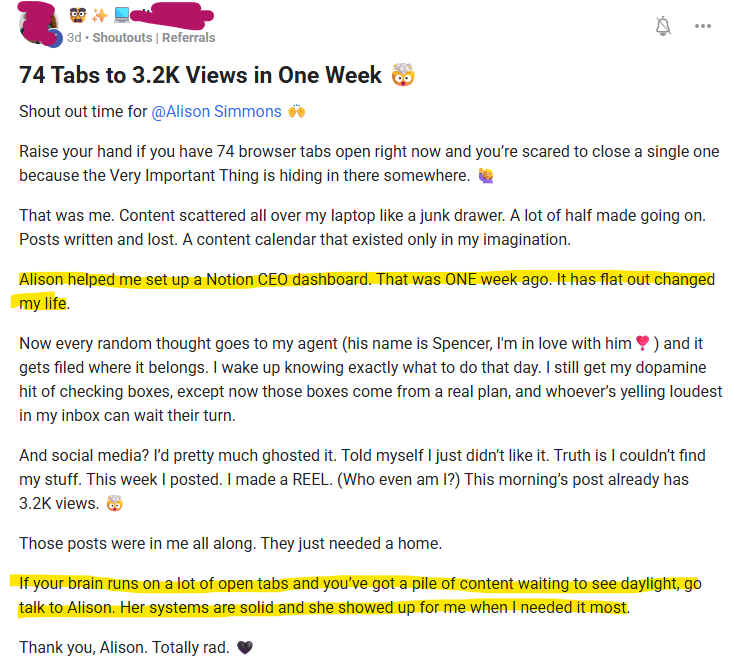
That did not happen because I built the most impressive Notion dashboard on the internet. It happened because I stopped trying to solve every problem at once and gave her the support she needed to think clearly enough to lead her business again.
Not every uneasy feeling means you failed
This experience has also had me thinking about how quickly those of us who care deeply about our clients can turn one uneasy feeling into a full client-service identity crisis.
If you have a happy client but you keep wondering whether you should be doing more, pause before you create a problem that does not exist.
You do not need to quietly add three extra deliverables, rewrite the scope, or work yourself into the ground just because your brain has decided consistent value no longer counts.
Ask instead.
Send a quick email or book a 15-minute check-in and say, “I’d love to hear what the biggest wins in your business have been over the last 30 days, and what would make the next month even more valuable.” Give them room to tell you what is working, what they need, and what they may not have even realized had changed.
On the other hand, if a client is unhappy, do not automatically assume you are the villain or that they are impossible to please.
Take an honest look at the agreement. Did you deliver what you promised? Did you miss an important need that was clear from the beginning? Or has the work gradually stretched into expectations that were never part of the relationship?
You can take responsibility and fix the problem without taking responsibility for everything that caused the problem.
That is the part I want you to remember…
Integrity means owning a miss when you make one, but it also means being clear about what belongs to you and what does not. Both are part of serving people well.
Weekly Challenge
Choose one current client relationship that has been taking up more mental space than it should.
If they are happy but you are worried you are falling short, schedule a short check-in or send a simple email asking about their recent wins and what would help them most next. Let their actual feedback guide you instead of trying to read their mind.
If they are unhappy, write down three things: what you promised, what they expected, and what has actually been delivered. Look for the gap without turning it into a closing argument against yourself or them. Decide whether the next right step is to repair the work, clarify the boundary, or have a more direct conversation about the relationship.
If you want help working through that conversation before your brain turns it into a courtroom drama, join the Notion AI Skool community for this week’s companion AI prompt. It will help you sort out what is yours to own, what needs to be clarified, and how to respond in a way that protects both the client relationship and your integrity.
If client delivery is starting to feel heavier than it should
Sometimes an unhappy client points to a fix inside one relationship. Sometimes it is a signal that your business is carrying more than your current backend can support.
If you are maxed out trying to serve the clients you already have, worried that delivery is slipping, or staring at a full calendar and wondering how you could possibly add more happy clients without dropping a ball somewhere, we should talk. Whether we work together inside the AI-Powered CEO System or one-on-one, we can build the clarity, systems, and AI support that help your business hold the work you are growing into.
I am especially excited to work with business owners before the end of the year so you can head into 2027 with a plan and support already in place, instead of spending January trying to catch up from the starting line. Book a call with me, and we’ll talk through what is feeling heavy, what needs to change, and whether working together makes sense.
Friend, the goal is not perfect client delivery. It is serving people with enough clarity, capacity, and integrity that you can recognize a real miss, make it right when needed, and keep building a business you are proud to lead.

